

Since Election Day in the U.S. this month, inquiries about getting the fuck outta leaving the United States have zoomed through the roof, and one of the common questions is how am I dealing with learning the language here in Portugal. Below, I’m reposting a THG article on learning Portuguese that was originally published last year. Reading it, I was struck by how little I’ve progressed in a year. Then it hit me.
I study language the same way I used to date. Non-committed (but with a heaping side of overthinking), fickle, quick to lose interest and move on, and hypervigilant for any sign of trouble. Always a sucker for BDE — big diction energy — I am drawn to any word that’s easy to pronounce, easy to use, easy to have my way with.
I will smile and flirt and dance with words. My promiscuous inner language ho leans into lustful lexicon hotties while snubbing serious syntax steadies.
The Hot Goddess
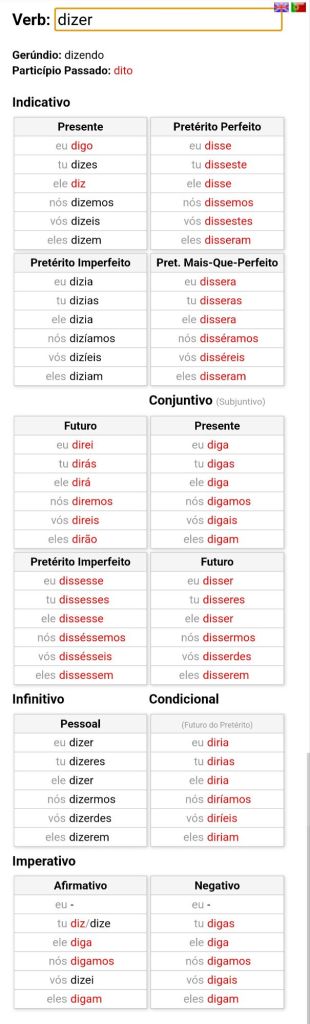
Here are all of the forms of the Portuguese word dizer (to say). This chart is courtesy of my occasional online study buddy that I reach out to every now and then for a late-night quickie. I’m not attracted to this study buddy — it’s not sexy or alluring — but when I’m horny and craving some non-committed but meaningful stimulation, it’s always there when I call.
I will smile and flirt and dance with words. My promiscuous inner language ho leans into lustful lexicon hotties while snubbing serious syntax steadies. Memorizing grammar rules is work. It requires commitment and exclusivity. Focus. That’s not fun. Não regras de gramática para mim. And, just like that, I will move on to the next exciting new thing.
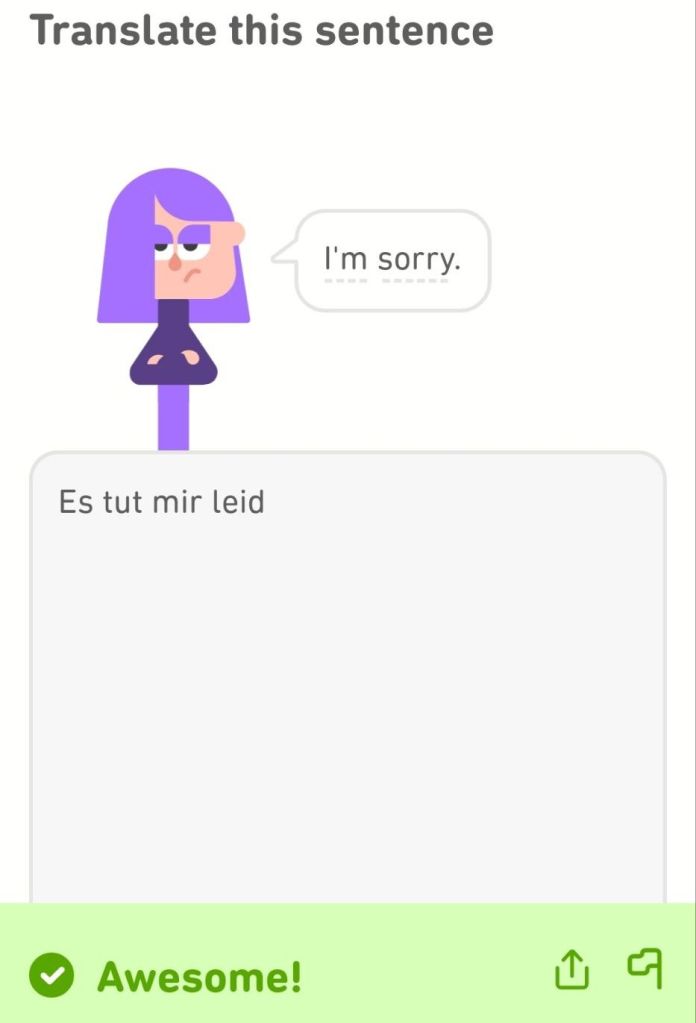
Source: Duolingo app
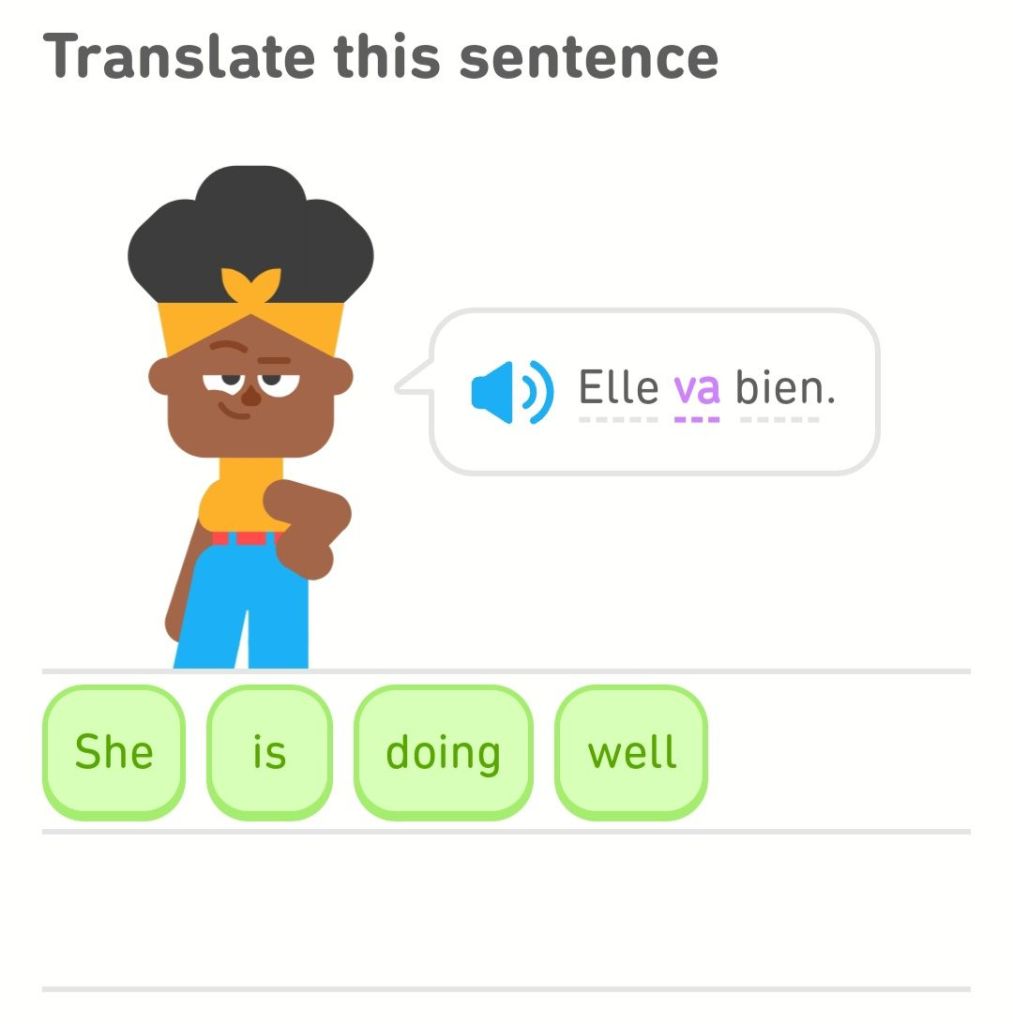
Always a sucker for BDE — big diction energy — I am drawn to any word that’s easy to pronounce, easy to use, easy to have my way with.
The Hot Goddess
OK, yeah, Portuguese remains my number-one squeeze. More than just an LWB. Mais ou menos. I mean, we do live together, after all. It’s just that, well, the faíscas… The sparks just ain’t what they used to be. Portuguese is so moody, so changeable, with no rhyme or reason. It always keeps me guessing with so many layers of unnecessarily complicated requirements to keep it happy. So I creep into bed with German and French — sometimes both together in a frenzied cluster fuck threesome — to feed my ho-ish desire for something new and easy. And let me tell you, so far, both of my new LWB cuties are waaaayyyy easier than high-maintenance, demanding Portuguese.
But, even though I don’t do commitment well, you can teach an old ho new tricks, and I am sticking with my Portuguese learning. I have inspiration, motivation, and accountability partners all around me.
My soup-making boyfriend is German and speaks five languages. He’s been living in Portugal for two years, but coming here regularly for 10 years. He’s at a B2 level of Portuguese. An American friend who has lived here two years already tests at level B2 and is taking an intermediate college course in Portuguese. And another American friend who moved here a year ago is taking the government-sponsored A2 course at a school, every day for two hours over four months. That is commitment. My boyfriend wants us to take this course — he at B2 while I do the A2 classes — but neither of us wants to sit in a classroom for two hours five days a week for 16 weeks. Sorry, Portuguese. This is why I don’t settle down in a committed language relationship. Couples therapy is a bitch. Time-consuming, painful, and too much stuff to work on at home.
“Heyyy, French, c’est moi, Natalie. Comment ça va? Wanna play?” “Hallo, German LWB. Wie gehts? Wanna have some fun?”
For now, my old L-Ho butt is continuing to play the linguistics field while making sure I can communicate well enough in Portuguese to get what I need when I need it. Verb tenses be damned.
I recently spent four days near Lisbon dog-sitting for the American friend who is taking the long-ass extensive A2 course. While she was out of town, I stayed at her apartment in a Portuguese-only neighborhood. Her adorable dog was a conversation magnet for every senior citizen with and without a dog.
One conversation was particularly lengthy. A friendly gentleman approached with his larger, leashed dog and asked if my friend’s dog was a cão or cadela. I understood that he was asking if the dog was male or female. Cadela translates to bitch, and is correctly used for female dogs. I learned this early on, when a guy on one of the dating apps messaged me something about “minha cadela.” When I looked the word up in my translator and saw the translation, I was like, “Ohh, hellll no! ‘My bitch?’ Who is he calling a bitch?” Then I found out he was talking about his female dog. Oops. Desculpe.
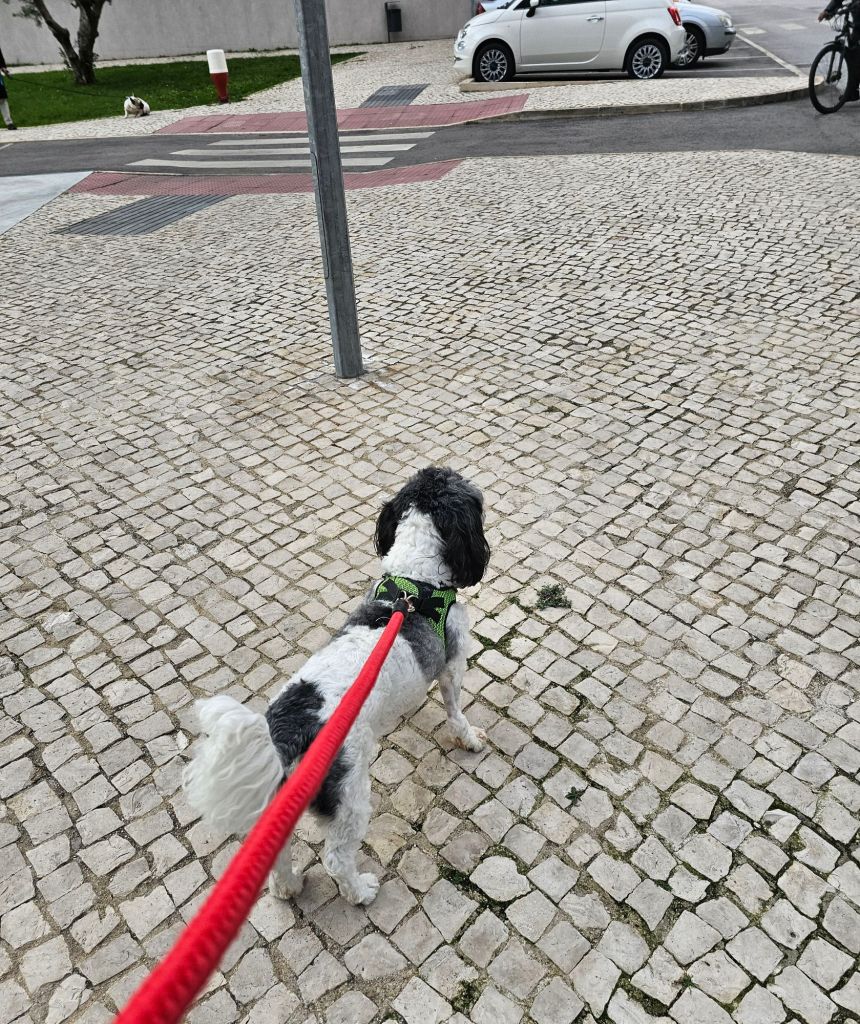
Anywho… Conversation with this particular man, who had a cão, went on and on. We talked about his first girlfriend, named Natália. We talked about Trump, Russia, Ukraine, Israel, Palestine, and Lebanon. I understood fewer than 50 percent of his words, but got enough of the gist to respond in basic word-chunks (“sentences” would be an overstatement) and to understand that our opinions were in agreement. I knew how to ask if we could move to the shade, and how to say, finally, that we (cadela and I) needed to go. What I didn’t say was that while a dog can simply do its business outside on the grass, this old cadela needed to get her over-60 bladder inside to a toilet.
On another day there, I locked myself and the dog out of my friend’s apartment. I had just come back from lunch with the American friend who’s taking the level B2 college course. I was talking on the phone with my boyfriend, who was out of the country, as I leashed the dog and took her out of the apartment door for a walk, realizing too late that the keys to the self-locking door and the building were still inside the apartment. Merda. My days of multi-tasking are gone. Talk on the phone and walk out of a door with a dog and keys at the same time? Nope.
Luckily, it wasn’t after 5 p.m., I had my phone, I still had my purse on me from lunch, and I realized my mistake before exiting the building. I was able to ask for help from a Portuguese-speaking couple who directed me to the apartment of the condo representative. That woman spoke some English and told me there was a locksmith shop at a nearby mall. I found the shop on Google Maps and called the number listed. I was thrilled the shop was still open for the day and excitedly explained what I needed in Portuguese to the man who answered the phone. What I couldn’t do was understand what the hell he was asking me in rapid Portuguese over the phone. When I asked if he could speak slower, he hung up.
The kind condo rep then called him and, after some animated discussion, she told me he was on his way to help me and would charge me 75 euros. Não problema.
We met him in the lobby, and as we and the dog rode up the elevator together, I could understand when he asked the condo rep in Portuguese if I was the owner of the apartment. I understood when she replied in Portuguese that she knew the dog and the owner and that I was a friend of the owner and caring for her dog. I understood when she asked him who would bring a dog to break into an apartment.
I also understood when he told the condo rep that he does not speak English because foreigners who come here to Portugal should learn to speak Portuguese. I understood when he said if people go to France they need to learn French, and if they go to Portugal they need to learn Portuguese.
Now, if there’s any cure for my overthinking and the resulting excruciatingly slow Portuguese that comes out of my mouth in over-considered bits and burps when I try to speak a sentence, it’s me getting pissed off. So, the Portuguese-speaking Brazilian locksmith understood me clearly when I told him in fluent-ish Portuguese, “I am learning Portuguese. I don’t yet speak very well, but I am trying. Nice people here want to help me practice by speaking slowly.” When he tried to interrupt me, I raised my voice and continued in Portuguese, “I am learning Portuguese! I am trying. And I am also learning French.”
I did not add the “Foda-se, cabrão” that I was thinking. I knew not to tell the man I needed to get me into the apartment, “Fuck you, asshole.”

Missão cumprida em Portugal. Nos Estados Unidos? Não. Não pode ser. Provavelmente alguém levaria um tiro, infelizmente.
In the U.S. this scenario would’ve played out very differently, sadly.
You know what I mean.
Still here? Ótimo! Without further delay, here is the aforementioned repost. There are links to language-learning resources at the end. If you are planning or considering a move to Portugal and have questions about how to prepare by starting to learn the language, this post has helpful information. This post also has another of my language-learning hacks.
Learning to Speak Portuguese Without Sounding Like an Idiot ~ Midlife Expat Learning
I wrote a blog article last year on interesting facts about the Portuguese language. It is spoken by more than 265 million people and is the most widely spoken language in the southern hemisphere.
The people of Portugal, who make up a small percentage of these speakers, use European Portuguese. The people of Brazil, who comprise the greatest percentage of Portuguese speakers, use Brazilian Portuguese. The two are similar but have key differences. Brazilian Portuguese is easier and has rules that make more sense.
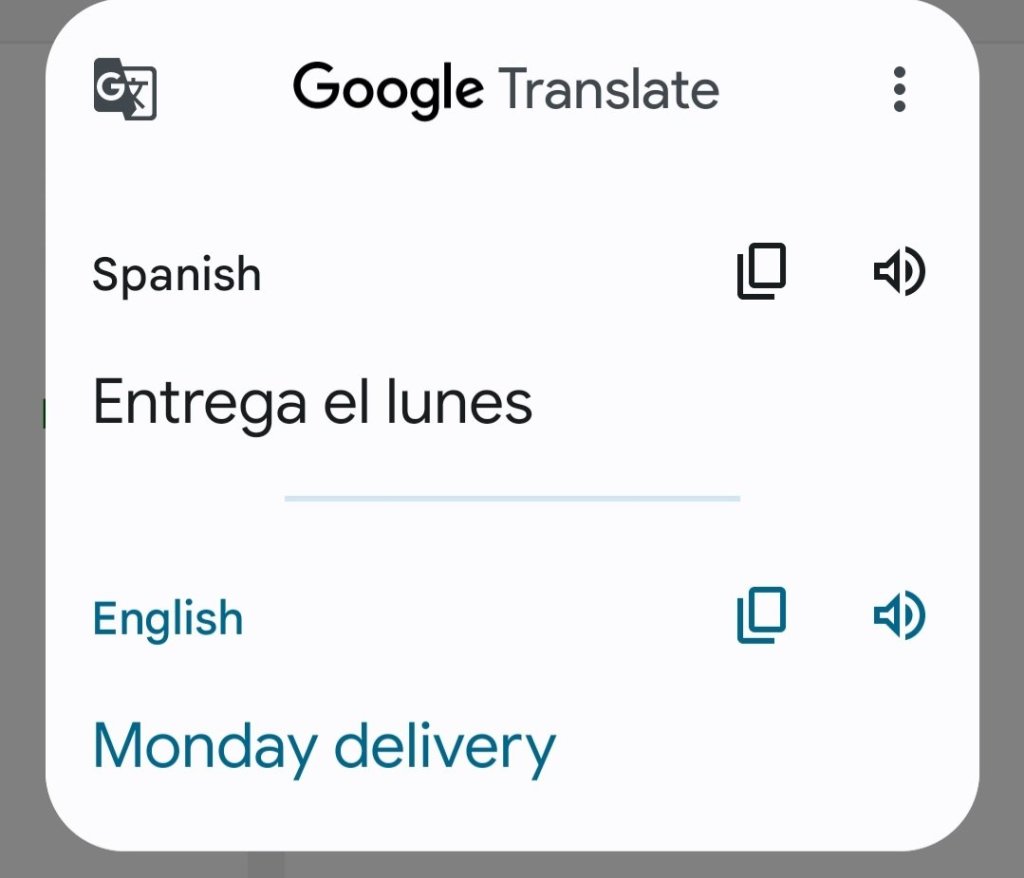
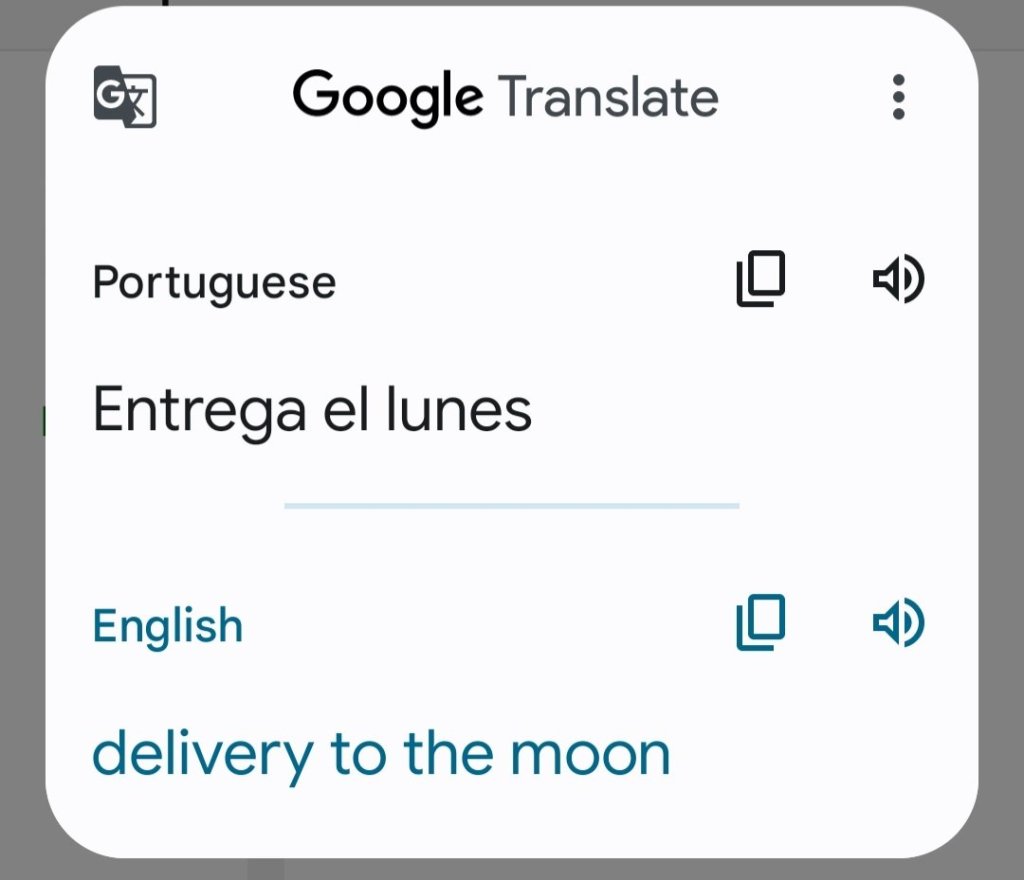
Don’t come over here thinking all you need to know is whatever Spanish you’ve picked up. Folks from here do not speak Spanish — even if they know how — and may consider it insulting. The two languages share some words (yes, please), but most are very different. Remember this delivery notice from Amazon Spain?
Speaking Caveman

David Sedaris, in Me Talk Pretty One Day, describes what it was like learning French after he moved to France. Like me, he stopped talking for a while out of fear of mispronouncing words. “It’s all I can do to remember how to recite my zip code, let alone an entire conversation,” he wrote. He describes two kinds of French. We have those same two kinds of Portuguese: the easy kind and the hard kind. The easy kind, Sedaris aptly explains, is when you yell in English slowly and as loud as you can. The hard kind is when you conjugate verbs and put them with other words to make sentences:
“I go him say good afternoon. No, not to him I no go it him say now.”
David Sedaris
This is exactly how my translated Portuguese sentences sound. Caveman speak. “Me want to dinner with friends new this yesterday.” Except when ordering bottles of wine. I can do that perfectly. Cocktails too.

Options for Learning Portuguese
I began studying Portuguese while still in the United States, using the free Duolingo app. After I found out Duolingo was Brazilian Portuguese, I began using Practice Portuguese and various other YouTube tutorials. After I arrived here, I started the basically free in-person classes offered at the senior citizens academy in my village. The course follows the public school calendar, running from September to June. When I started in November, the class had already moved too far along for me, so I didn’t return after winter break.

*Cue swagger*
*Cue tripping on slippery-ass cobblestones*
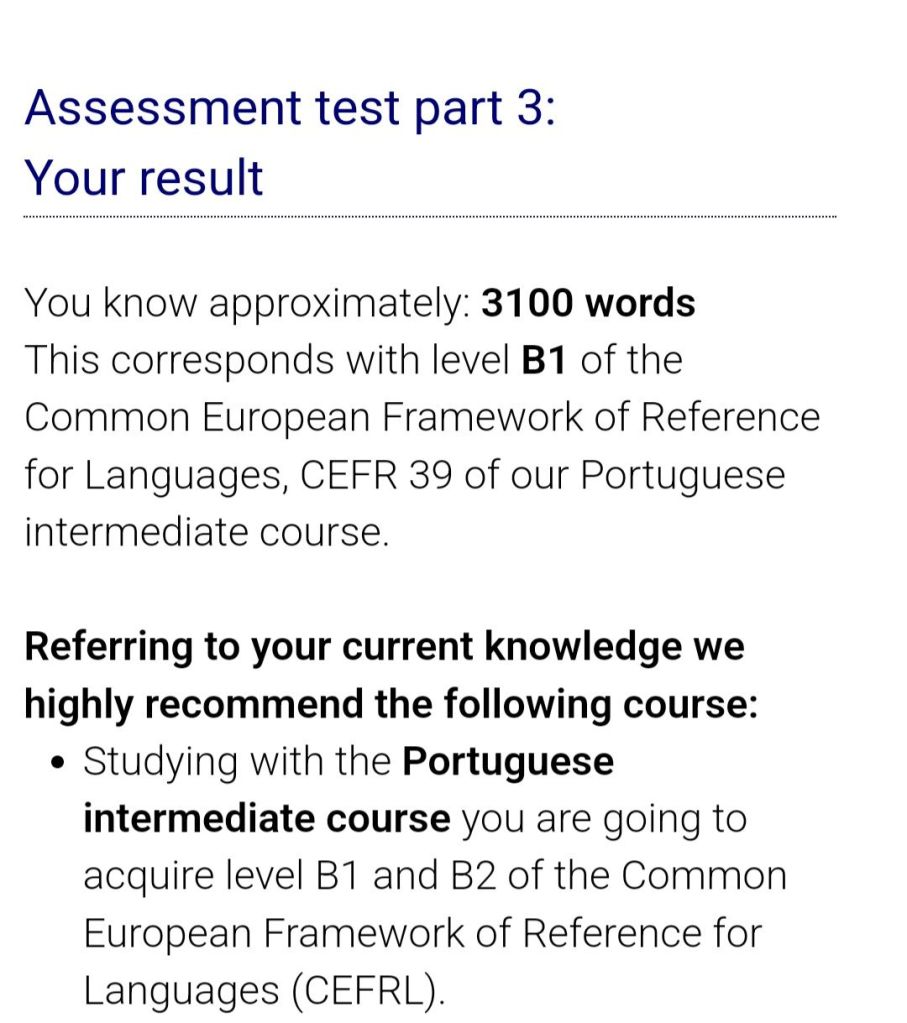
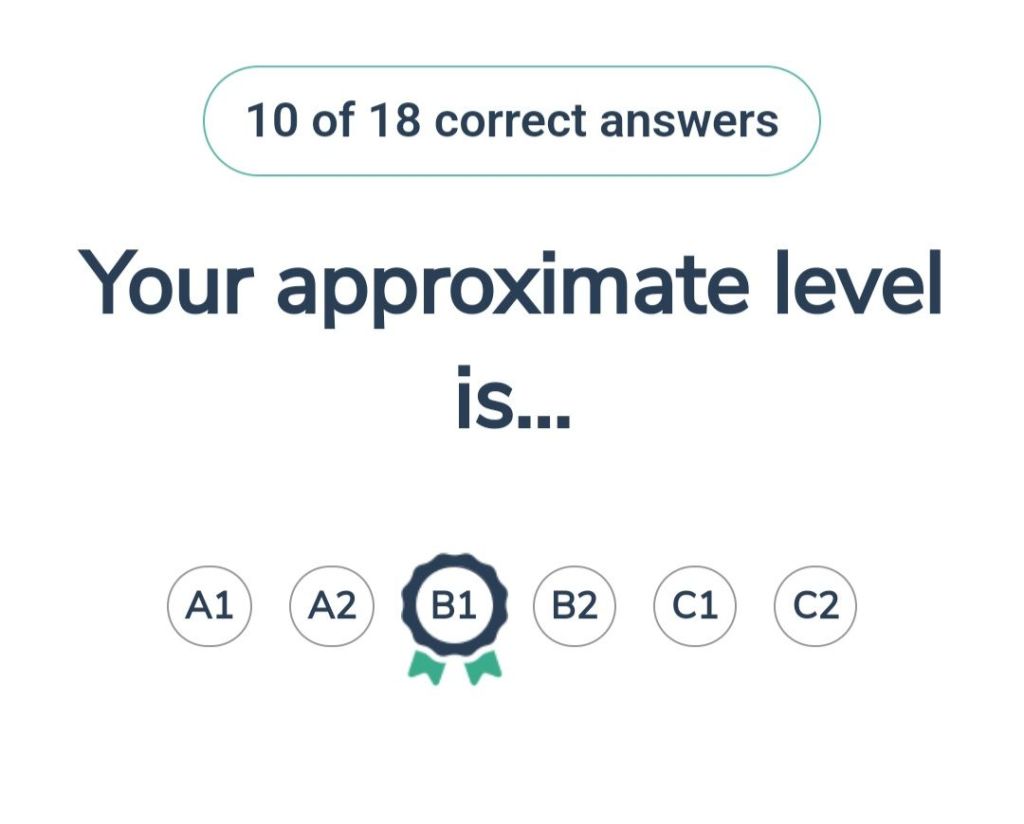
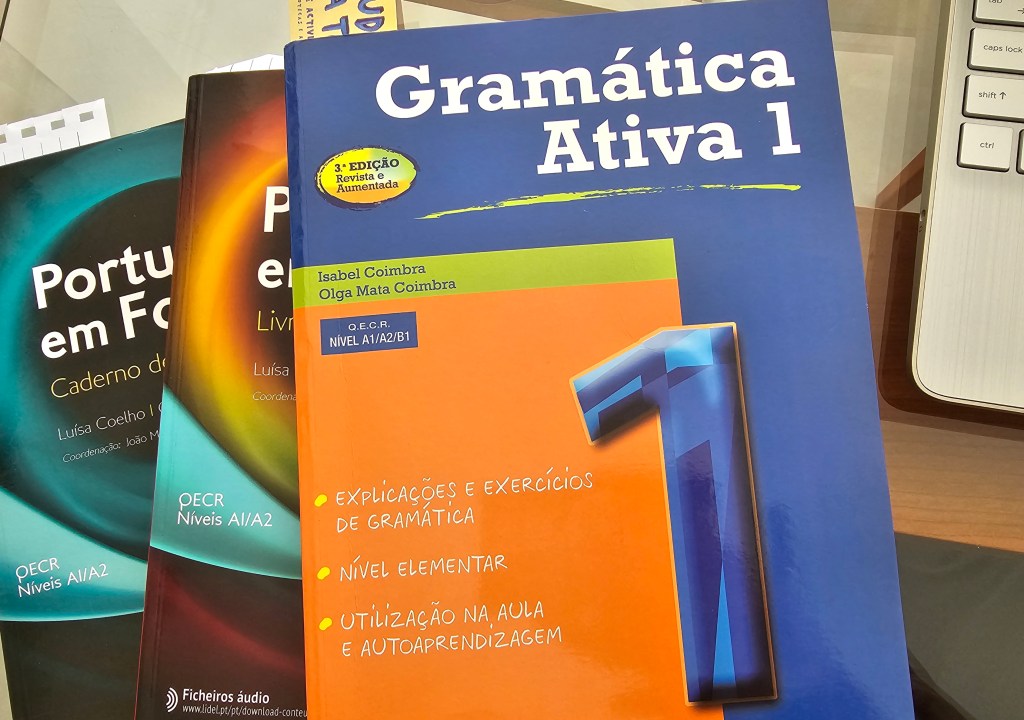
Instead, I found a private tutor through iTalki.com and purchased five weekly conversation lessons. After those lessons, I wanted a more intensive, daily class, and found several online group options through various government-accredited schools and universities. I chose a brick-and-mortar language school in Lisbon that offered online options and, after taking a required placement test, was enrolled in a 20-hour, two-week “intensive course” at level A2.
Let’s just say I’ve forgotten most of level A1, so when a minha professora reviewed A1 grammar on the first day, I was like, “Oh merda.” Two hours a day without a break during lessons was hard for me, and retention was low after the first hour every day. I spent another two hours each evening doing homework and studying.

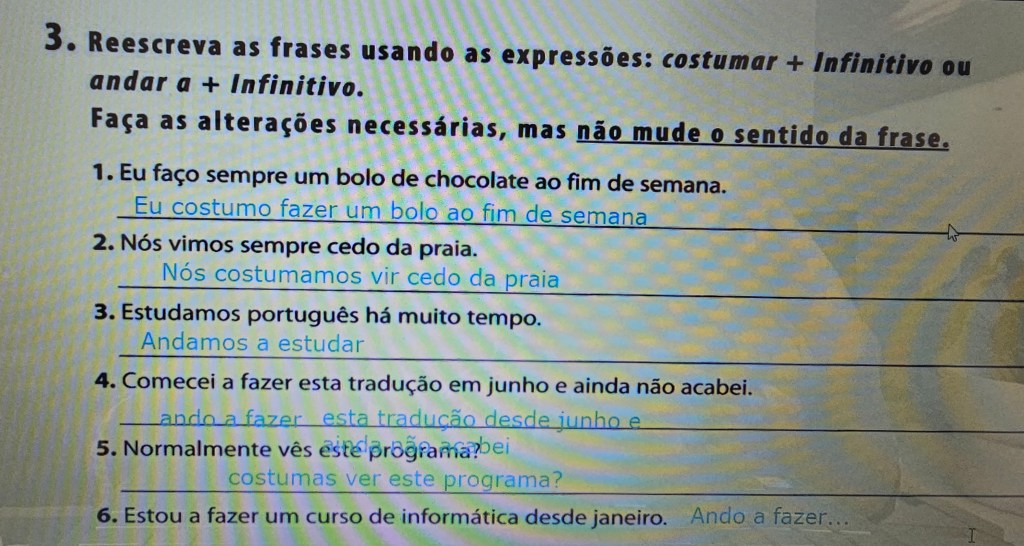

(2024 Update: I have already forgotten ALL of this mess!)

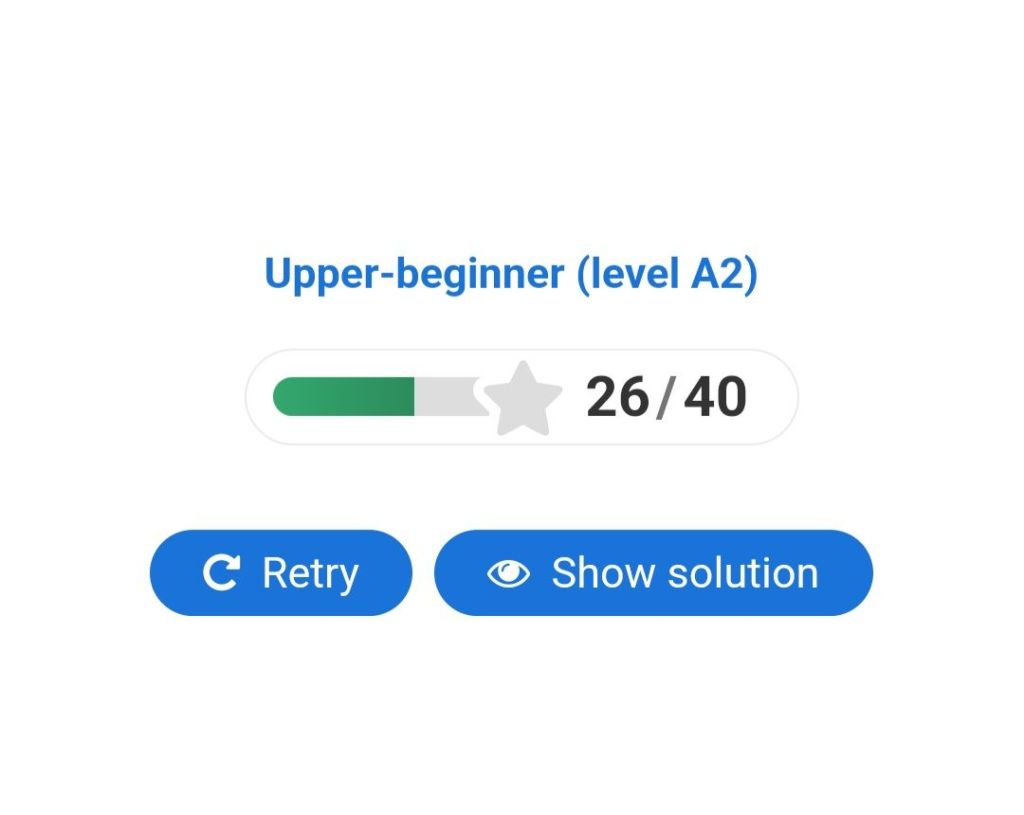
I got a B- on the test, which “preocupada-ed” me.
Before I continue with the second 20-hour A2 module, I’m working in my workbooks to review new and old learning. In September, I may enroll in a free government-sponsored course for foreigners, which, like the senior citizens academy, follows the academic calendar and will run until June of the next year. Eventually, some of this stuff will stick. Until then, it’s learn, practice, review, repeat.
I’m actually pretty good at understanding written Portuguese, and am getting additional practice with books I checked out of our local library using my new library card.


I’m also continuing to get help from my 6-year-old neighbor and pequena professora. She illustrated these “flashcards” of body parts for me. Practice makes perfect.


My Favorite Words
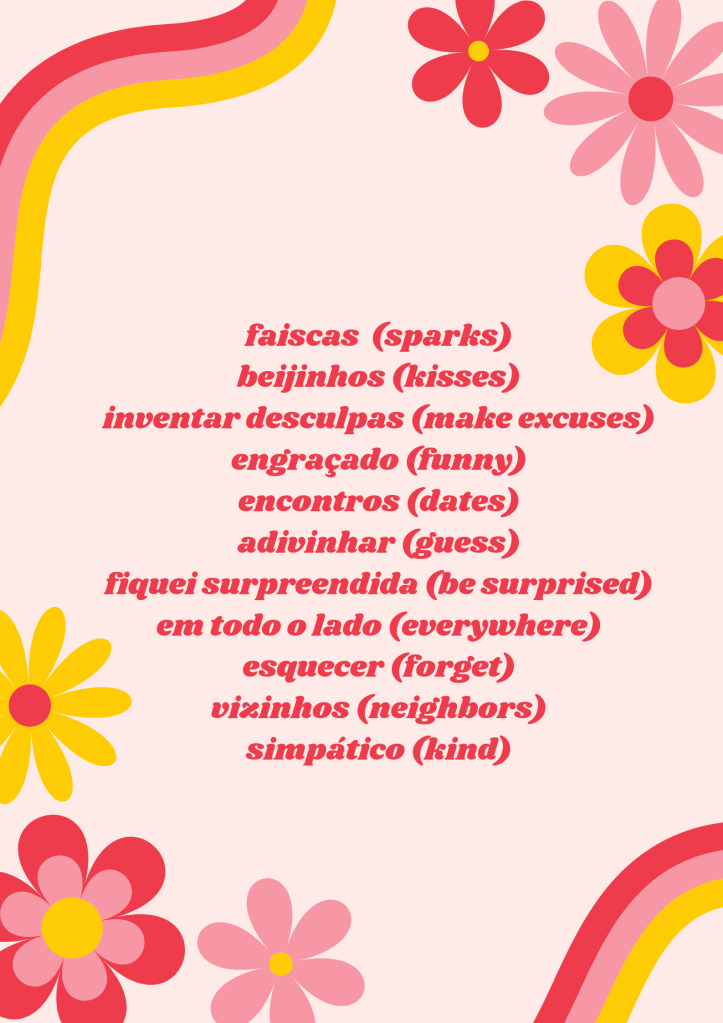
“Beijinhos” is typed in text messages as a customary sign-off by women and men here, reflecting the common Portuguese practice of kissing each cheek twice when greeting and leaving someone. Some folks close a text with the abbreviation “Bjs.” In the U.S., “bj” stands for something else, so the first time I got a text message with “Bjs” at the end — from my hairdresser here — I was like, “What the…?”
Links to Resources

Stay Tuned
Moving to another country is a complex process, and information can change quickly without notice. Everyone’s experience can be different. I’m remembering to take it all in stride, stay flexible, prepared, pivot-ready, and positive. Stay tuned.
Midlife Expat Learning Posts
Thank you for reading! ❤️ May your weekend find you learning something new and having fun with it.

The Hot Goddess
Instagram: retired_rewired_inspired
If you enjoyed this please remember to Share, Like, Follow, Comment, Subscribe. (This is my “call to action” I’m supposed to include in every post. Thanks so much for your support!) ❤
Copyright ©️ 2021-2024 thehotgoddess.com. All rights reserved.

 The Hot Goddess
Oh, this is great Natalie. Hilarious. BDE energy. Too funny. REminds me that we all learn at our own pace. Gives me hope for myself. Ha, ha.
LikeLiked by 2 people
Thank you so much, Brian! Yes, we all definitely learn at our own pace and in our own way. 😁
LikeLiked by 1 person
Fun and informative, Natalie. And yet, Europeans and others manage to learn multiple languages. We can do it!! 😊 Bravo to you!!
LikeLiked by 1 person
Thank you, Jane! ❤️ Absolutely. We can and are doing it. More now than ever, I suspect.
LikeLiked by 1 person
What a travail! It’s always good to know the language enough to say ‘fuck you’ 🙂
LikeLiked by 1 person
LOL! You’ve got that right, June! ❤️
LikeLiked by 1 person
I loved your list of what you understood in Portuguese, enough to know his rude complaints right in front of you. Well said. I like how you specified that you were learning Portuguese and kind people speak slowly. Jerk. Still, I think your move to Portugal was a very wise one, especially with the climate that’s coming in 6 weeks.
LikeLiked by 1 person
Thank you so much for your kind words, Rebecca! ❤️ Yes, sadly, I am more grateful than ever to be here.
LikeLiked by 1 person
I enjoyed your sassy language ho trials and tribulations Natalie. I seem to have the same non-committed approach to my whole life, hence the boring routines and no action or changes. Uggh! You seem to be thriving in your new home and life. Kudos.
LikeLiked by 1 person
Thank you so much, Brad. We all can easily get stuck in one way or another, can’t we? There have been many times in my life when I didn’t know what to do, so I did nothing and found comfort and reassurance in familiar routines. When you’re ready, my friend. 💜
LikeLiked by 1 person
Thank you Natalie for the understanding and encouragement. 😊
LikeLiked by 1 person
Loved it! A very enjoyable but spot-on roller-coaster ride of trying to learn the language when you’re actually getting by just fine, but you do want your new friends and neighbours to know you respect their right to expect you to try!
I’m doing it with Deutsch here in Switzerland, Portuguese is next in Paredes da Vitoria! Good luck! 🙂🙂
LikeLiked by 1 person
Thank you so much, David! I’m glad you enjoyed this read. Best of luck to you with German and Portuguese. 😁
LikeLike
I love your posts, just the right amount of humor and sarcasm!!!! What a jerk to hang up on you when you told him you were learning the language – sheesh! I’ve tried Duolingo to learn Spanish but gave up on it after a few months… yeah, that’s my M.O. I’m glad you’re doing so well in Portugal…it’s gonna be hell here for the next 4 years (and beyond if he gets his way) 😭
LikeLiked by 1 person
Thank you so much, Sharon! ❤️ I can so relate to the on-again-off-again engagement with Duolingo. It’s a surreal and sad time in my other home, America. I am very grateful for my options.
LikeLike
As a person who speaks several languages which I acquired simply by being in environments where people spoke those languages during my childhood, this was really interesting to read. I struggled learning English when I was 11 but there was no Google translate at the time (1980)…
You’re right about the one sentence that jumped out at me:
Nice people help me to learn the language…
It’s true right? Some asshole who gets impatient when you’re trying doesn’t deserve our energy, time or money, even (if you’re purchasing something)… But I believe most people are more than happy to adjust their speed and to allow someone to practice with them.
LikeLiked by 1 person
Merci beaucoup, Claudette La Raconteuse 💜. Kind and patient people are a must when learning to speak and listen to a new language. It was so much easier to learn everything as a child. As an over-60 student, though, I struggle to rememher even English words I know 😆.
LikeLiked by 1 person
Lol 🍸🍹😉
LikeLiked by 1 person
I’ve been studying Ukrainian for 2 years with a small group and our progress feels painfully slow. I listened to a recipe video in rapid Ukrainian, and could understand maybe half of it, but even a year ago I wouldn’t have done so well. How well does a 2 year old speak? Do we expect them to converse on the level a high school student could? We’re kind of like toddlers, learning a language, just because we’re adults doesn’t mean we’re going to learn it any faster!
LikeLiked by 1 person
So true, Tamara! Thank you for the reminder 💜
LikeLiked by 1 person
As adults we put high expectations on ourselves, don’t we?!
LikeLiked by 1 person
Girl Natalie, this was just too funny… every bit of it. Where the hell would you go, child? So far I don’t see anywhere that is looking promising by any stretch of the means.
Your comparison to dogs and men had me rolling on the ground and I needed that right now. Not all but yes, men can be dogs and it’s a biotch. Way to hold your ground with the door!
Thanks for the entertainment. Take good care! 💗😂🙌🏽
LikeLiked by 1 person
😁 Thank you so much for reading, Cindy, and for laughing with me! ❤️
LikeLiked by 1 person
💗🙌🏽💗
LikeLiked by 1 person
Great post, Natalie, and funny too! All I can say is that I’m still learning Spanish, and it’s my first language. 😂 Keep Calm and Carry On.
LikeLiked by 1 person
LOL, Edward! Thank you for this needed encouragement 💛. I’m happy you’re laughing along with me.
LikeLiked by 1 person
Yes, who would bring a dog to break into an apartment and photograph the attempt!? You probably got a B1 grade because your humor shines through everything you say. Extra credit for that!
LikeLiked by 1 person
Ha! Thanks so much, Geoff! Thank goodness for that extra credit. I certainly won’t be getting any bonus points for effort and study habits.
LikeLiked by 1 person
[…] word mashed together from English and Portuguese. This sometimes happens unintentionally as I continue to learn to speak […]
LikeLiked by 1 person
[…] language(s). I’m learning German and relearning French, along with Portuguese. It is a comedy of errors and a constant struggle. But I am learning every day. For instance, I had […]
LikeLiked by 1 person
[…] from Portuguese, or an English and Portuguese combo. This sometimes happens unintentionally as I continue to learn to speak […]
LikeLiked by 1 person
[…] Portuguese, or an English and Portuguese combo. This sometimes happens unintentionally as I continue to learn to speak […]
LikeLiked by 1 person
[…] treatment lying down. As I’ve noted, nothing improves my spoken Portuguese fluency like getting pissed off. I ended up receiving the prescriptions I needed for medications that are right for me and my common […]
LikeLiked by 1 person
[…] from Portuguese, or an English and Portuguese combo. This sometimes happens unintentionally as I continue to learn to speak […]
LikeLiked by 1 person