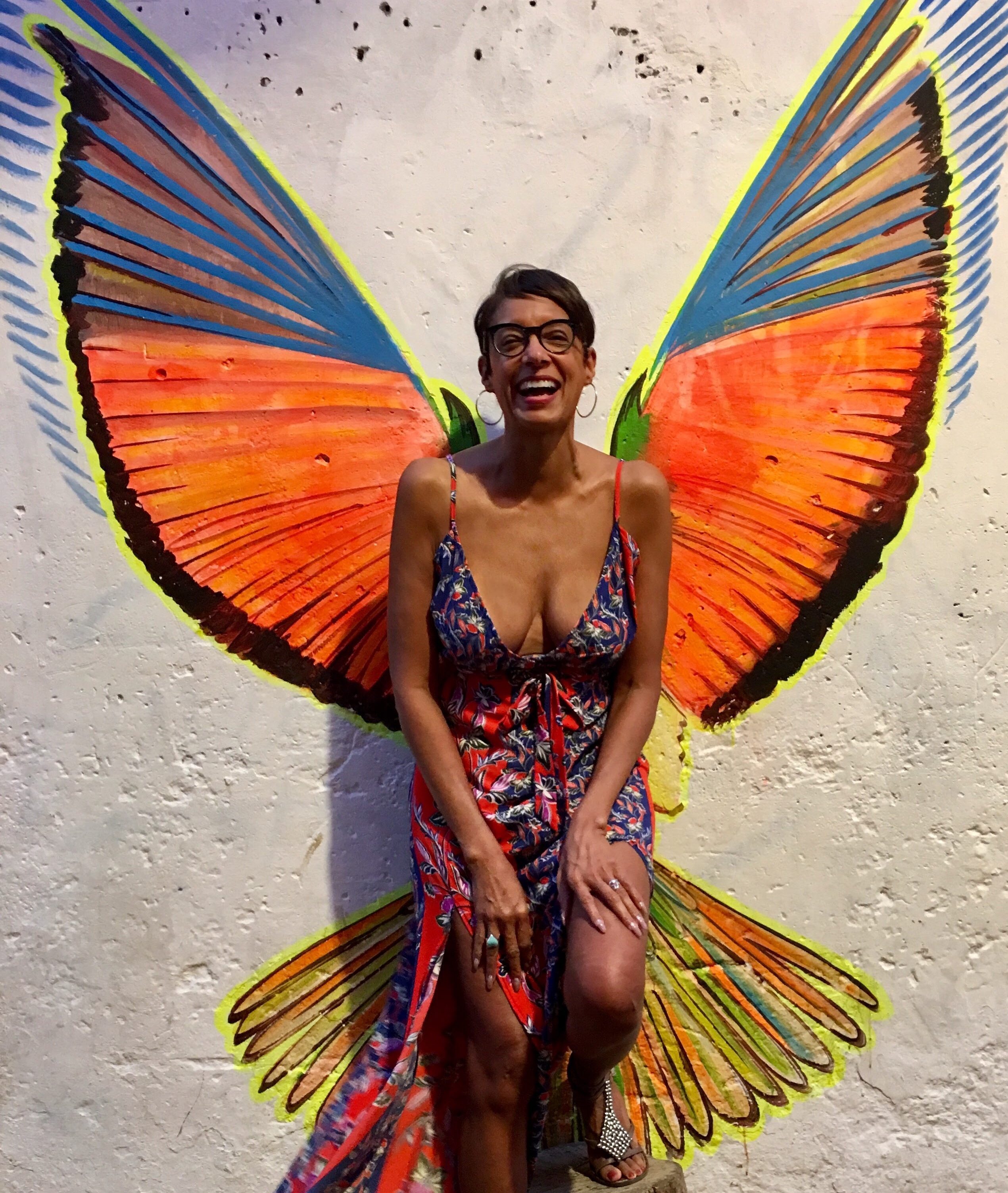

A recent discussion with another midlife American woman who moved here from the U.S. is sticking with me. Particularly the parts about parenting adult children from afar, and the effects of parental pussification on younger adults.
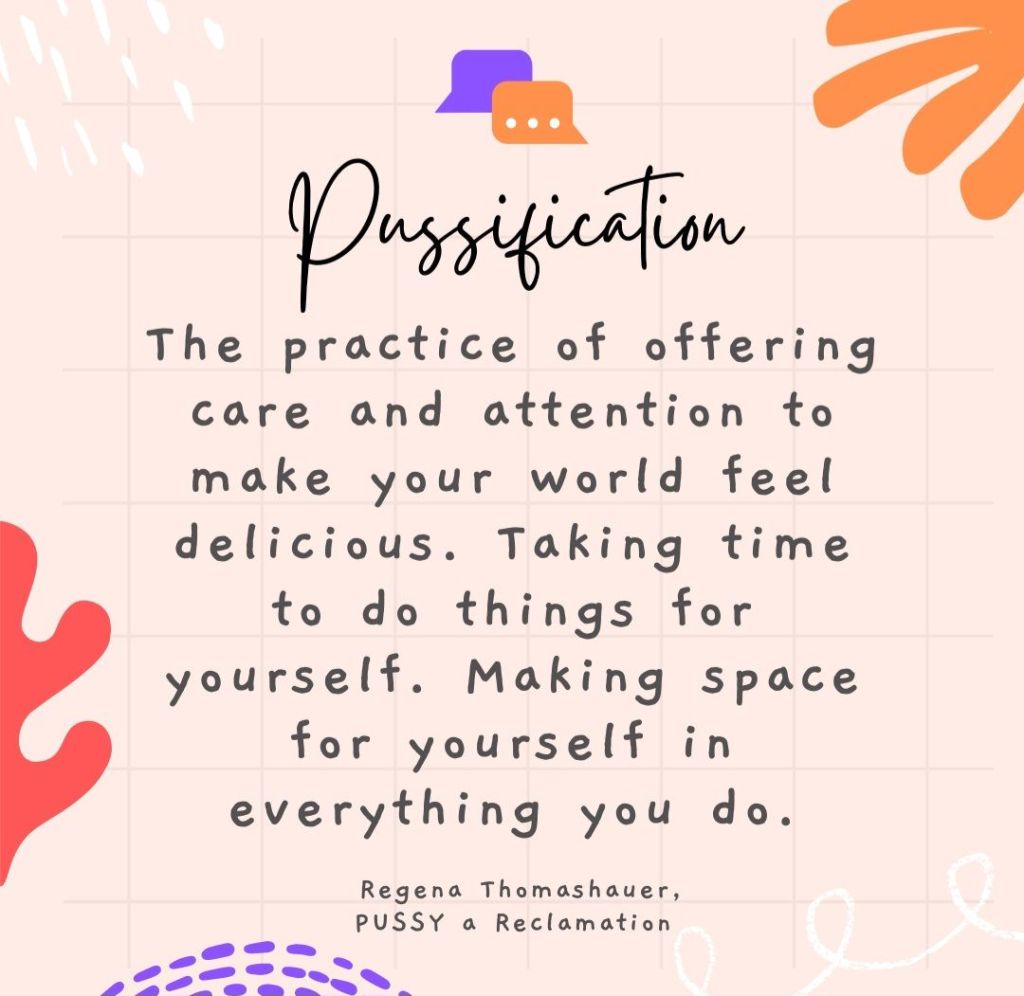
No. Not this type of pussification.
We talked about this one:
Pussification. The act of always giving a loved one what they want and solving all their problems for them, thus preventing that person from developing grit and resilience and tough determination.
This is going to piss some people off.
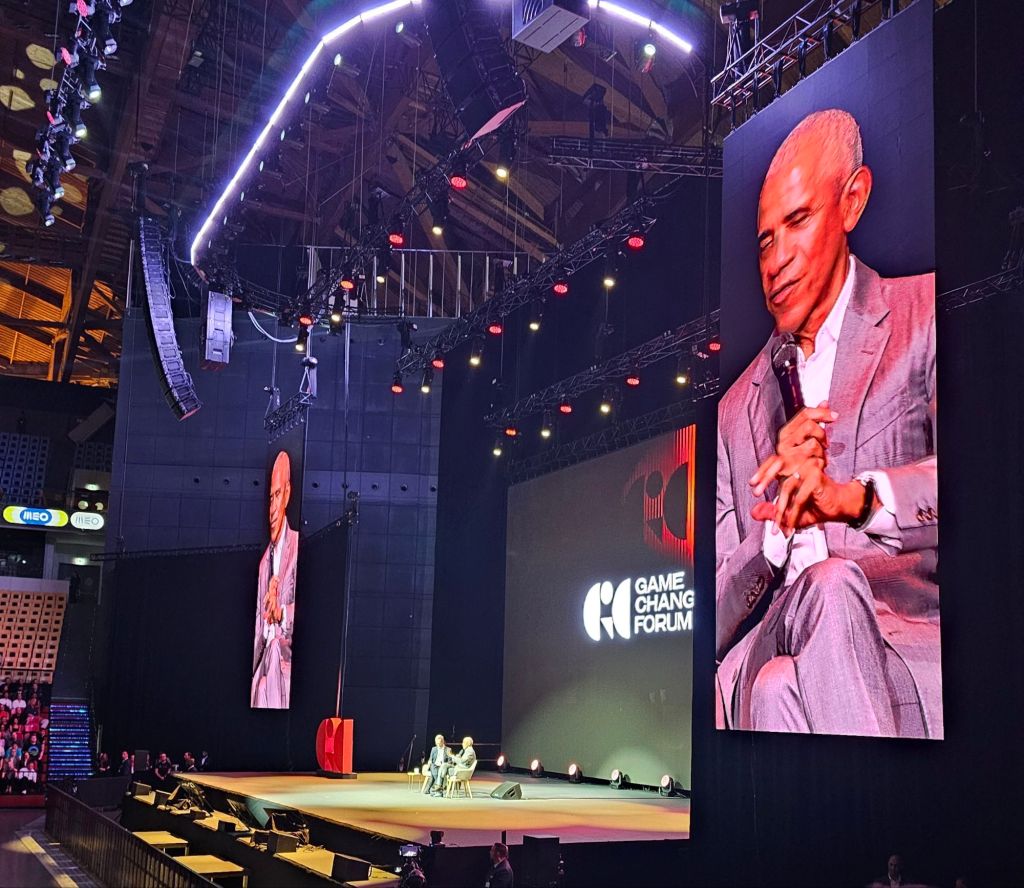
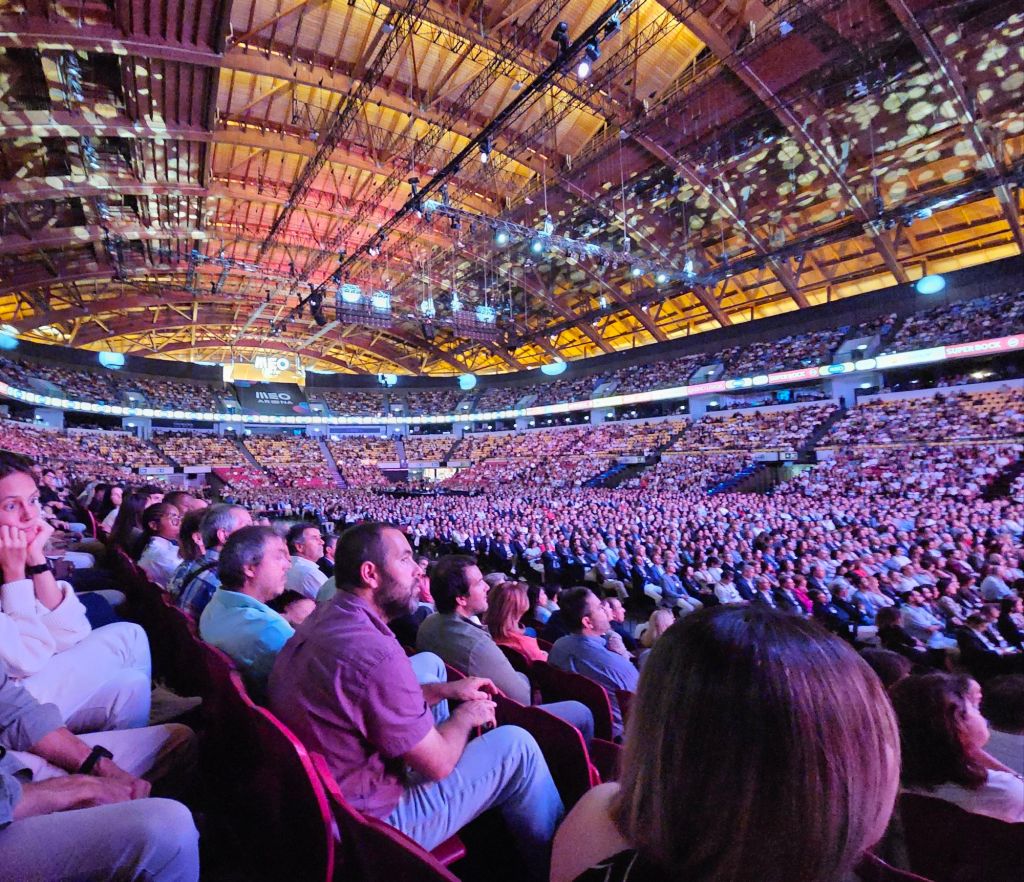
Let’s back up a bit. This woman and I were discussing President Obama’s talk at the Gamechangers Forum we attended in Lisbon last weekend. It was thrilling to join 10,000-plus people who packed MEO Arena to see and hear my always-and-forever president speak.
As we chatted about his talk, we got on the subject of what I call “the other AI.” Artificial intelligence, yes. But, Artificial as in fake. Intelligence as in smarts. Fake smarts masquerading as expert facts — from humans, not bots. In this regard (and others, if you ask me), social media are as much a threat as the AI that encompasses machine learning.
President Obama commented on both during his talk. At one point, he quipped about folks listening to “some guy who has never studied biology, sitting in his basement posting on Reddit,” (fake smarts) instead of the science presented by a Nobel prize-winning scientist (expert facts).
I shared with my acquaintance an observation about social media spawning Me Too Syndrome, which goes hand in hand with the well-known Fear of Missing Out (FOMO), and how I believe it has forever changed a generation’s views on work, travel, and personal health, among other things.
During our long conversation, we two over-60 moms exchanged observations about younger adults prioritizing travel over job responsibility. Rule-breaking entitlement to do what one wants when one wants. The need for and expectation of immediate gratification, rather than delayed reward for diligent work.
“Me too, me too, me too! I deserve to travel the world on a cruise ship now too! If I get fired I can live with my parents for a while!” (Or, maybe you can be a grown-up and sit your ass at your desk and do the job you’re being paid to do so you can support yourself. The cruise will be there when you get vacation time.)
Then there were our observations about younger adults self-diagnosing mental health issues, adult ADHD, emotional trauma, or whatever diagnostic code du jour they read on Reddit, scrolled on Instagram, and consumed on endlessly repetitive, content-ravenous, 24/7 online “news,” video, and podcast outlets.
“Me too, me too, me too! I have Borderline Personality Disorder too! That’s why I can’t stay in a relationship! Or work full time because the stress is triggering!” (Or, maybe you just have a fucked up personality because you’re spoiled and expect everything to always go your way.)
“Is the Glovo generation — who have come of age expecting instant and effortless delivery of what they want — just as hungry for effortless, convenient doorstep delivery of boxed answers to their issues?”
The Hot Goddess
Of course, the open discussion of mental health issues has been hugely beneficial to many people. If I had had the benefit of this open discussion 40 years ago, I might not have attempted suicide in my 20s.
Now, thanks to social media, seeking and talking about therapy is the healthy norm. Over the summer, I had brunch with several Black American women in their 30s and 40s who’d moved here from the U.S. Some had been here a few years, others only a few weeks. I was struck by how they — women who did not know each other before that day — began freely sharing therapist recommendations and therapy resources in Portugal. It was as natural and open an information exchange as sharing recommendations for hair salons, Pilates studios, and organic grocery stores. That never would have happened in my Black girl world 40 years ago. So, yes, social media have changed the mental health landscape in beneficial ways.
But, is online content that’s created using trending key words to optimize search engine performance and maximize the currency of clicks manipulating not only our thinking and our choices, but also what we believe about our personal health? Is it possible we might self-report symptoms and signs to a health professional just because we read or saw a reel about them online?
“Five Signs You Are…”
“Three Surefire Ways to Know You Have…”
“If You Do These Six Things You Probably Are…”
“Don’t Ignore These 10 Signs of…”
“Me too!” “Me too!” “Me too!”
Is it also possible that anecdotal stories of mental health struggles shared on content-obsessed social media are being consumed as expert facts by some who grew up in a generation informed by influencers, followers, and trends?
Here is where I’m going to piss people off, if I haven’t already…
Not everybody is bipolar just because they’re moody. Not everybody has PTSD just because they still remember when a classmate teased them and made them cry in third grade. Not everybody has adult ADHD just because they procrastinate. And not everybody is dating a narcissist just because someone acted like an asshole. Not everyone is struggling with some diagnostic code. Not even if one saw it on TikTok.
Wait for it…
Some of us are struggling, of course. Many folks of all ages are. And some of us might need a “trending” diagnosis to… blame for our shit?… be a part of what’s trending?… belong to a group?… get what we want?
Oh, damn. There it is.
Oh, no she didn’t!
Is the Glovo generation — who have come of age expecting instant and effortless delivery of what they want — just as hungry for effortless, convenient doorstep delivery of boxed answers to their issues?
I personally know people (not blood relations, if you’re reading) for whom the answers to these questions are likely yes, based on evidence from observation and discussion over long periods of time. That’s not to say it’s a prevalent phenomenon. I’m just pondering here.
“They say growing old ain’t for pussies. Neither is growing up.”
The Hot Goddess
During our discussion, my fellow expat/immigrant and I wondered how, as parents (and even grandparents) of a generation of social media-obsessed, trend-chasing, algorithmically manipulated followers, do we best support our younger adults?
Do we give them everything they want when they want it? Do we enable their feelings of entitlement, even when there is clear and ongoing evidence of manufactured excuses and poor decisions? Can you love and care for and support your children, and also let them experience struggle and failure as an important building block for developing grit and resilience? Can you love and support and accept your adult children, and also refuse to enable their bullshit detrimental choices?
Should a parent put being a good role model for an adult child above being a good buddy to that adult child?
When does questioning your adult child’s thinking and social media-informed self-diagnoses based on fake smarts make you a bad parent? Do good parents ever question their adult children’s thinking, actions, or decisions?
Are we bad parents if we teach our children that they don’t have to experience difficulty, work hard or wait for what they want? Are we bad parents if we allow our adult children to see that, yeah, at times life can be hard, people can be assholes, desires can be unfulfilled, and adulting can be tough?
My acquaintance and I each have a lot of opinions about this, but not many answers. We agree on one thing we both know: They say growing old ain’t for pussies. Neither is growing up.
All images are my own.
The Hot Goddess
If you enjoyed this please remember to Share, Like, Follow, Comment, Subscribe. (This is my “call to action” I’m supposed to include in every post. Thanks so much for your support!) ❤
Copyright ©️ 2021-2026 thehotgoddess.com. All rights reserved.


